

For small business owners in Virginia, navigating the world of employee benefits can be a challenge.
But securing the right small business health insurance in Virginia is a critical step in attracting top talent and maintaining a healthy, productive team.
This guide is your starting point. We’ll break down the complexities of health insurance for small business Virginia, covering everything from different plan types to cost-saving strategies.
By the end, you’ll be equipped with the knowledge to make an informed decision and find the best Virginia small business health insurance options for your company, whether you have a team of two or twenty.
Get Started!
We make it easy to find affordable plans & benefits.
Launch the chat or schedule a free consultation with a licensed expert Mon-Fri, 10am-4pm EST
Ted McNeil
Owner, Broker
BenZen Insurance
An Independent Agency
Understanding Your Virginia Small Business Health Insurance Options
Before diving into the costs, it’s essential to understand the types of health insurance for small business Virginia has to offer.
The following sections will walk you through the key distinctions between plans like the SHOP marketplace, traditional fully-insured plans, and the increasingly popular level-funded plans.
We’ll also cover minimum employee requirements and compliance rules to ensure you’re on the right track.
Health Insurance for Small Business in Virginia
Securing affordable health insurance for your small business involves understanding several crucial requirements. Here’s a breakdown of the key factors to consider:
- Minimum Employee Numbers:
- Most insurance carriers require a minimum of two full-time W-2 employees to qualify for small group health insurance.
- Full-time employees are those who work 30 or more hours per week.
- While the business owner can be counted as one employee, the second employee should be unrelated (not a spouse) to prevent the policy from being a family plan.
- Defining Employees (IRS Standards):
- The IRS generally defines employees as those who perform services, if the business can control what will be done and how it will be done.
- This distinction is critical for determining eligibility for group health insurance, as self-employed individuals typically pursue individual marketplace health plans.
- Employer Contribution:
- Insurers often mandate that employers contribute a minimum percentage toward employee premiums. This contribution requirement can vary, but is typically 50%.
You’ll need to confirm the specific standards with your chosen insurance provider or broker.
- Insurers often mandate that employers contribute a minimum percentage toward employee premiums. This contribution requirement can vary, but is typically 50%.
- Regulatory Compliance:
- Small businesses must adhere to both federal and Virginia regulations, such as the Affordable Care Act (ACA), workers’ compensation and any applicable state laws.
- Consulting with a knowledgeable insurance broker can significantly streamline the compliance process.
RELATED POSTS:
“Small Business Health Insurance In Maryland: Costs, Plans & Options”
“$0 Deductible Health Insurance Plans: Good Idea or Bad?”
“The Future of ACA: The Individual Marketplace Is Changing”
Virginia Small Business Health Insurance Options
Virginia small businesses have a few paths to coverage.
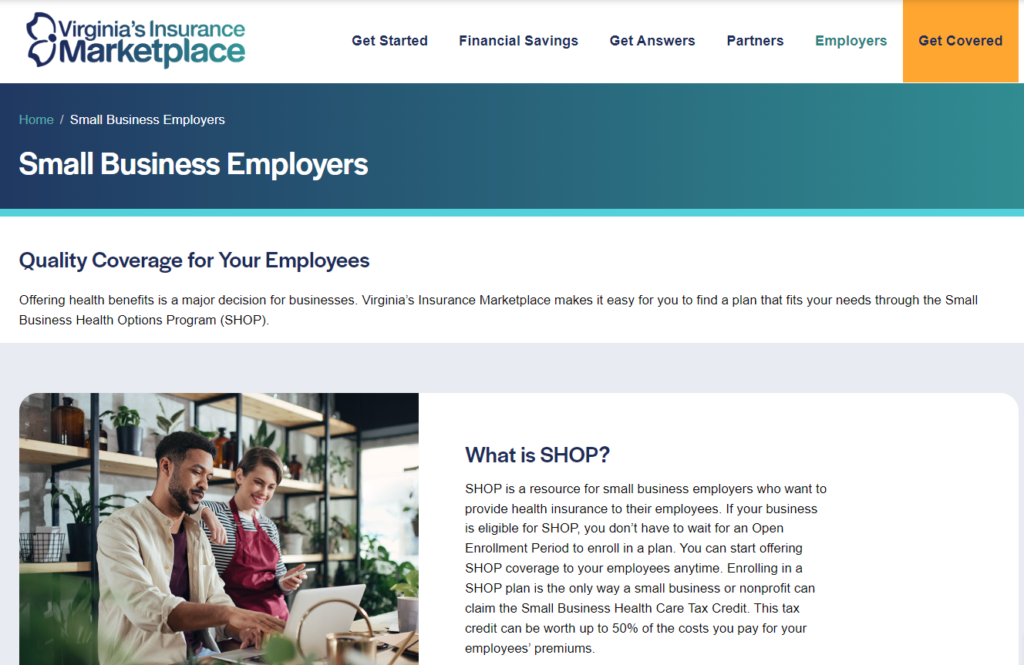
SHOP plans do exist through Virginia’s Insurance Marketplace, and they can qualify you for the Small Business Health Care Tax Credit — but availability is inconsistent.
Carrier participation varies significantly by county and rating region, so SHOP isn’t a guaranteed option depending on where your business is located.
For most of the small businesses we work with, level-funded plans end up being the more reliable and often more cost-effective path — especially for a healthy workforce.
They combine the predictability of fully-insured coverage with the savings potential of self-funding, and they’re not limited by the same geographic restrictions as SHOP.
A licensed broker can tell you within minutes whether SHOP is even available for your specific location — and if it’s not, walk you through level-funded and fully-insured alternatives instead.
For tax questions specific to the Small Business Health Care Tax Credit, consult a certified tax professional.
Understanding Fully-Insured vs. Level-Funded
The challenge of rising healthcare costs is a reality for businesses of all sizes, and Virginia’s small businesses are no exception.
To effectively manage these costs while providing valuable benefits, understanding your funding options is crucial.
We touched on SHOP marketplace health plans. Outside of the exchange, there are two primary models: fully-insured and level-funded plans.
Choosing the right plan can significantly impact both your employees’ well-being and your bottom line.
We’re here to help you navigate these options, to select the benefits solution that aligns with your team’s needs and your budget.
Fully-Insured Plans
Think of fully-insured plans as “traditional” health insurance where your business pays a fixed monthly premium to an insurance carrier.
SHOP Marketplace plans are fully insured.
The carrier assumes all financial risk of your employees’ healthcare costs.
Your group is also community rated, meaning individual employee health conditions are not directly factored into your premium calculations.
Employees in good health are grouped with employees who are not so healthy to determine price.
This has been the most common arrangement, but has also been the most expensive option.
How it works: Fixed monthly premium; insurer handles all claim risk.
- Pros:
- Predictable costs
- ACA compliant (pre-existing conditions OK)
- Cons:
- Higher premiums
- Limited network flexibility
- No end-of-year rebates
- Ideal for: Businesses willing to pay more for stability, especially with diverse employee health profiles.
Level-Funded Plans
Level-funded plans are increasingly popular and offer a hybrid approach to traditional plans where you share some of the risks, which lowers overall costs.
For small businesses with a predominantly healthy workforce, level-funded plans can provide optimal cost efficiency, though they do require a review of medical history by the carrier for accurate quoting.
Contact us to explore our level-funded options:
- Fixed monthly premiums
- Stop-loss limits exposure & liability
- Potential for rebates based on annual claims
- Generally less expensive than fully-insured plans
How it works: Fixed monthly payment covers projected claims, fees, and stop-loss insurance; requires employee health history.
- Pros:
- Potentially lower costs
- Greater plan flexibility. (in-network & out-of-network)
- Limited liability
- Potential for rebates
- Cons:
- Employee health history required.
- Specific plan start dates.
- Ideal for: Businesses with healthier employee populations seeking cost savings.
How Much Does Small Business Health Insurance Cost in Virginia?
The cost of small business health insurance in Virginia depends on factors like group size, plan type, and employee demographics.
Generally, larger groups get lower per-employee rates.
While smaller businesses (2-10 employees) might find individual marketplace plans combined with reimbursement arrangements cost-effective, many prefer group plans for attracting and retaining talent.
To illustrate, let’s compare fully-insured vs level-funded plan options for a 5 person company:
Fully-Insured
In Virginia, the average annual premium per employee in 2024 was approximately $8,951, or $746 per month.
Based on this figure, a fully-insured group plan for 5 full-time employees would cost around $3,700-$4,000 per month.
Level-Funded
These plans, which involve shared risk and underwriting based on employee medical history (typically the past 5 years), can offer potential cost savings.
Highlights include:
- Potential Refunds: If claims are lower than projected.
- Greater Plan Flexibility: Allowing for tailored benefits.
- Risk Mitigation: Through stop-loss insurance.
- Underwriting: Medical history review is required, impacting final pricing.
To illustrate the potential savings, let’s look at one of our recent level-funded quotes.
We presented three plans for a company with 5 employees, showing a total monthly costs ranging $2,000-$2,500, or $400-$500 per employee.
These figures are estimates for medical only. Dental & vision are additional.

Contact us for a free custom quote tailored to your business’s specific needs and employee demographics.
Why Choose a Virginia Health Insurance Broker for Your Small Business?
Offering competitive employee benefits, including quality health insurance, is essential for attracting and retaining top talent in Virginia.
However, navigating the complexities of Virginia small group health insurance can be challenging, especially for businesses with 2-20 employees.
A Virginia health insurance broker can simplify this process, providing expert guidance and access to a wide range of plans, at no extra cost to you.
Key Benefits of Using a Virginia Health Insurance Broker
We offer a broad selection of Virginia employer health insurance plans from top carriers, including:
- Aetna
- Anthem
- UnitedHealthcare
- Access to Multiple Providers: Brokers provide a comprehensive view of the market, enabling easy comparison of rates and benefits.
- Expert Guidance: Brokers simplify complex insurance terminology and ensure compliance, saving you time and preventing costly errors.
- Tailored Solutions: Brokers understand your unique business needs, identifying cost-effective plans that align with your budget.
- Ongoing Support: Brokers offer continuous support for claims, renewals, and questions, reducing administrative burdens.
Is There a Cost to Working with a Health Insurance Broker?
No. Partnering with a broker is a cost-effective way to secure the best health insurance for your business.
Here’s why:
- Carrier Compensation: Brokers are usually compensated by the insurance company for educating and assisting customers. This compensation is factored into the carrier’s bottom line regardless of whether you use a broker.
- Regulated Rates: Insurance rates are set by carriers and regulated by the state. Brokers cannot alter these rates, ensuring you pay the same premiums as you would directly from the insurer.
How to Find a Virginia Health Insurance Broker for Small Business
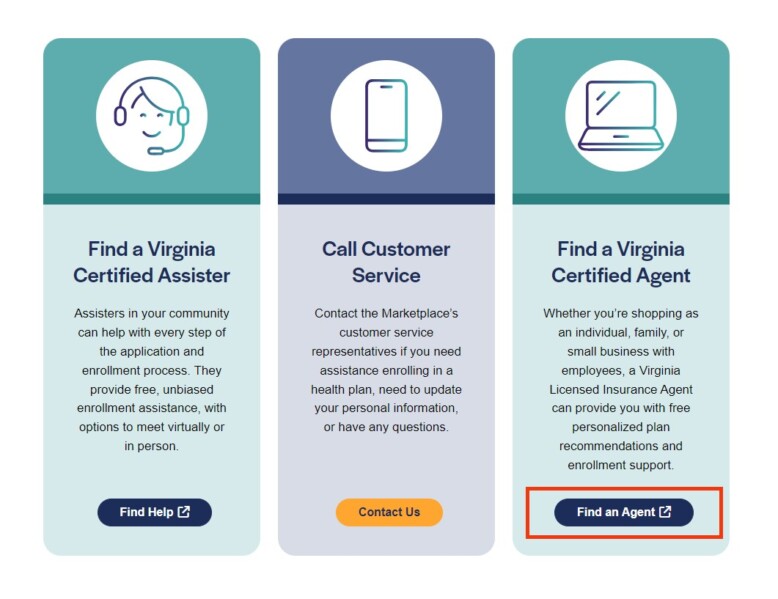
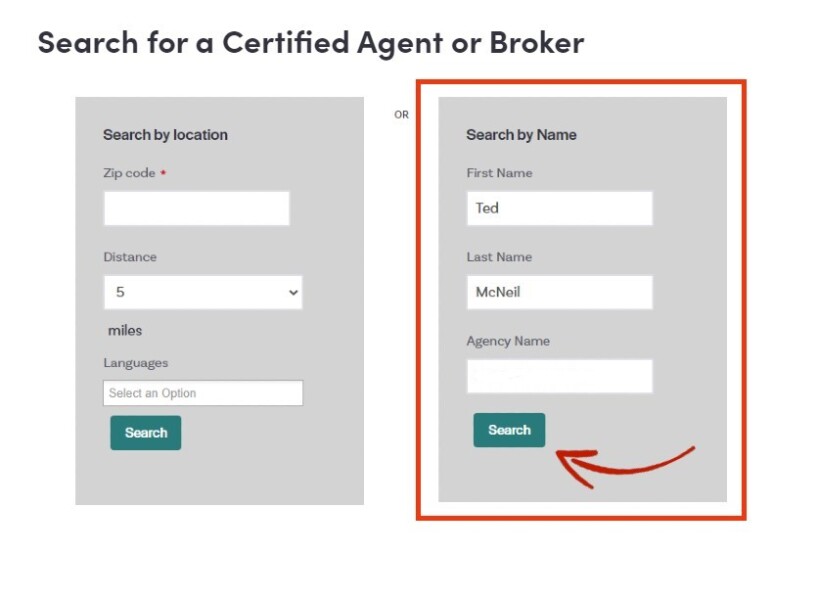
A great starting point is Virginia’s Insurance Marketplace (marketplace.virginia.gov).
This state-based exchange lists vetted and certified brokers qualified to assist with individual, family, and small group health plans defined as less than 50 employees.
While some agencies may serve multiple states, consider choosing a broker with specific expertise in the Virginia market.
Their knowledge of local regulations and carrier networks can be invaluable.
Plus, the service is FREE! That’s exactly what we do.
As a Virginia-licensed broker, we handle the SHOP eligibility check, carrier comparison, and enrollment — at no extra cost to you.
What If an Employee Is Managing Diabetes or a Chronic Condition?
This is where plan choice matters more than most employers realize.
Level-funded plans require a review of employee medical history to set pricing — which means a workforce with one or more employees managing diabetes or another chronic condition may see a different quote than a fully healthy group.
That’s not a reason to avoid level-funded coverage, but it is a reason to have an honest conversation with your broker upfront rather than getting surprised at underwriting.
Fully-insured plans, by contrast, are community-rated — individual employee health conditions don’t directly change your premium. For a small team where one employee has ongoing healthcare needs, that predictability can be worth the higher baseline cost.
There’s no universally right answer here. It depends on your group’s size, health profile, and how much cost volatility your business can absorb.
This is exactly the kind of decision worth walking through with a broker who understands chronic condition coverage — not just group insurance in general.
Get Started!
We make it easy to find affordable plans & benefits.
Launch the chat or schedule a free consultation with a licensed expert Mon-Fri, 10am-4pm EST
Ted McNeil
Owner, Broker
BenZen Insurance
An Independent Agency